
A Turnkey Project With Fewer Handoffs
Full-service pool design and build means the pool is planned as part of the whole backyard, not as a standalone shell. Landscape Studio Group coordinates the layout, 3D renderings, permitting path, construction sequencing, pool decking, stonework, lighting, planting, water features, spa placement, and startup guidance from one plan.
That matters on North Atlanta properties because slope, clay soil, drainage, access, trees, patios, views, safety barriers, and HOA requirements can change the right pool shape before construction starts. The earlier those decisions are made together, the cleaner the build usually gets.
Pool Cost Planning
Most custom in-ground pool projects in Roswell and North Atlanta need a broad planning range. Public 2026 pricing sources often place straightforward custom gunite pools around $85,000-$120,000 and larger pool, spa, deck, and landscape projects around $150,000-$350,000+.1, 2
This range fits design-build pool projects where the pool, spa, decking, coping, drainage, landscape, and outdoor living space are planned together. It is not a fixed Landscape Studio Group quote. A final number should follow the site walk, design scope, selections, engineering needs, and local approval review.
These planning bands help separate a basic pool conversation from a finished backyard build. The wider the scope around the water, the more the pool budget is shaped by hardscape, drainage, lighting, planting, and outdoor living details.
Best fit for a custom gunite pool with a cleaner shape, standard equipment, and limited surrounding outdoor living scope.1, 2
Cost rises when the site needs more excavation, drainage, retaining walls, premium finishes, or larger deck areas.
Best fit when the pool includes an integrated spa, tanning ledge, larger deck, upgraded finish, lighting, automation, water movement, or more detailed stonework.2
This is often where the design starts to feel less like a pool shell and more like a connected outdoor room.
Best fit for larger custom pools with premium decking, integrated spa, retaining walls, fire or water features, outdoor kitchen, cabana, lighting, and landscape work.2
At this level, the pool is usually one part of a larger backyard construction plan.
Local market context: Angi's local in-ground pool guide lists a common range of $53,865-$98,360 and a $74,546 average for in-ground pool installation.3 That benchmark can sit below a custom gunite backyard when the project includes integrated spa work, premium decking, walls, planting, lighting, and outdoor living space.
Vinyl, fiberglass, and gunite pools do not serve the same kind of backyard. A vinyl or fiberglass pool can give useful price context, but a custom gunite pool is usually the closer fit when the design includes a spa, tanning ledge, shaped steps, stonework, raised walls, or architecture-led outdoor living.
Useful low-end market context, but not the closest match for LSG's custom design-build and poolside landscape position.4
A helpful comparison point for homeowners weighing a standardized shell against a more tailored pool and landscape plan.5
The strongest match for custom shapes, integrated spas, tanning ledges, walls, and pool layouts shaped around the property.6
River Pools' full-installation range supports how quickly concrete pool budgets can climb once the project moves beyond a basic shell.7
Compact pools can fit tighter yards, though larger concrete plunge pools can exceed $75,000 when structure and finishes are more involved.8
Long, narrow pool layouts are relevant when fitness, architecture, views, and clean landscape lines shape the design.9
The pool shell sets the foundation, but the features around it often shape the real investment. A raised spa, tanning ledge, upgraded finish, water feature, automation, lighting package, pool decking, and pool coping can each change the scope before construction begins.
Integrated spas change structure, plumbing, heating, controls, finish details, and how the pool is used in cooler months.2
A shallow lounge shelf affects shell shape, plumbing, finish surface, umbrella placement, and family use around the water.2
Pebble or upgraded interiors usually sit above basic plaster and should be tied to water color, texture, and long-term care expectations.2
Vanishing-edge details add engineering, hydraulics, catch basins, stonework, and careful grade coordination.2
Decking should be priced clearly because square footage, surface material, drainage, steps, and transitions affect daily use around the pool.10
Coping frames the pool edge and should be separated from deck pricing so material, labor, and finish details are clear.11
Water movement changes plumbing, pump needs, sound, sightlines, nighttime effect, and service access around the equipment.12, 13
Automation systems and lighting packages should be planned before equipment, electrical, paths, steps, and outdoor rooms are finalized.2, 13
Roswell and North Atlanta backyards often bring slope, clay soil, tree cover, access limits, and drainage needs into the pool plan. Excavation, grading, rock removal, retaining walls, irrigation repair, and landscape restoration should be discussed early so the proposal reflects the whole yard.
Sloped yards can need engineered walls, raised bond beams, terracing, drainage, and added site preparation before finishes are selected.13
Rock and difficult dig conditions can sit outside a basic pool allowance and should be clarified before construction starts.13
Walls affect structure, drainage, stairs, planting, safety, and how the pool terrace meets the home.14
A poolside kitchen changes utilities, hardscape, shade, lighting, seating, and the way guests move through the backyard.15
Shade structures should be coordinated with views, columns, drainage, electrical, furniture, and circulation.16
Pool construction usually disturbs lawn, beds, irrigation, paths, privacy planting, and finish grading around the work area.17
Drainage planning matters around pools, patios, walls, steps, lawns, and new planting beds.18
Irrigation repair or expansion should be considered when new decking, turf, planting, and privacy screening are part of the pool project.19
Permit fees and review steps vary by city and county. A pool proposal should allow for permit review, site plans, trade permits, utility locates, safety barriers, inspections, HOA review, and property-specific issues such as septic, wells, easements, trees, or retaining walls.
Public utility locate requests should be made before digging. Private utilities may need separate locating.20
Fence permit, water or backflow approval, site plan, and septic or well approval may apply.21
Fulton Environmental Health and water or sewer approvals may apply depending on the property.22
Erosion, sewer, CO/CC, trade permits, tree inventory, and barrier requirements may apply.23
Site plans should show the pool, spa, barrier, gates, decking, equipment, and setbacks.24
Unincorporated Cobb requires pool permits and inspections, with signed and sealed design information for submittals.25
Electrical permits, backflow, accessory structures, and engineered retaining walls can affect the final scope.26
The ranges above are drawn from current public pricing sources and local pool-builder pages. They are planning benchmarks, not a fixed Landscape Studio Group price. A final quote should follow a site walk, design scope, selections, engineering needs, and local approval review.
Before You Compare Quotes
A clear custom pool quote should separate the pool structure, site work, decking, coping, spa, water features, lighting, automation, permits, drainage, planting, and outdoor living scope. That makes it easier to compare proposals before the backyard is under construction.
Shell type, size, depth, steel, plumbing, equipment, interior finish, tile, coping, startup, and owner walkthrough.
Construction access, soil, rock, haul-off, grade changes, drainage, erosion control, tree protection, and retaining walls.
Deck square footage, surface material, pool coping, steps, seat walls, drainage, transitions, and finished edges.
Spa, tanning ledge, water feature, fire feature, lighting, automation, heater, gas, electrical, and equipment screening.
Pool permit, trade permits, site plan, HOA review, safety barriers, gates, utility locates, inspection timing, and local conditions.
Planting, sod, turf, irrigation repair, privacy screening, mulch, maintenance handoff, final clean-up, and phased outdoor living work.
Fast Answers Before The Site Walk
A strong custom pool plan answers cost, site, safety, and design questions before the proposal becomes a set of numbers. Explore the Poolside Services, In-Ground Pools, and Custom Pool Cost Guide pages for deeper planning context.
The pool, spa, deck, walls, lighting, planting, drainage, and outdoor rooms are planned together.
Slope, clay soil, mature trees, limited access, HOA rules, drainage, and safety barriers can all change pool placement.
Decking area, coping material, equipment, controls, safety barrier planning, finish selections, and landscape repair should be clear.
Gunite is usually strongest when the design needs a custom shape, integrated spa, sun shelf, benches, raised walls, or water features.
One Coordinated Backyard
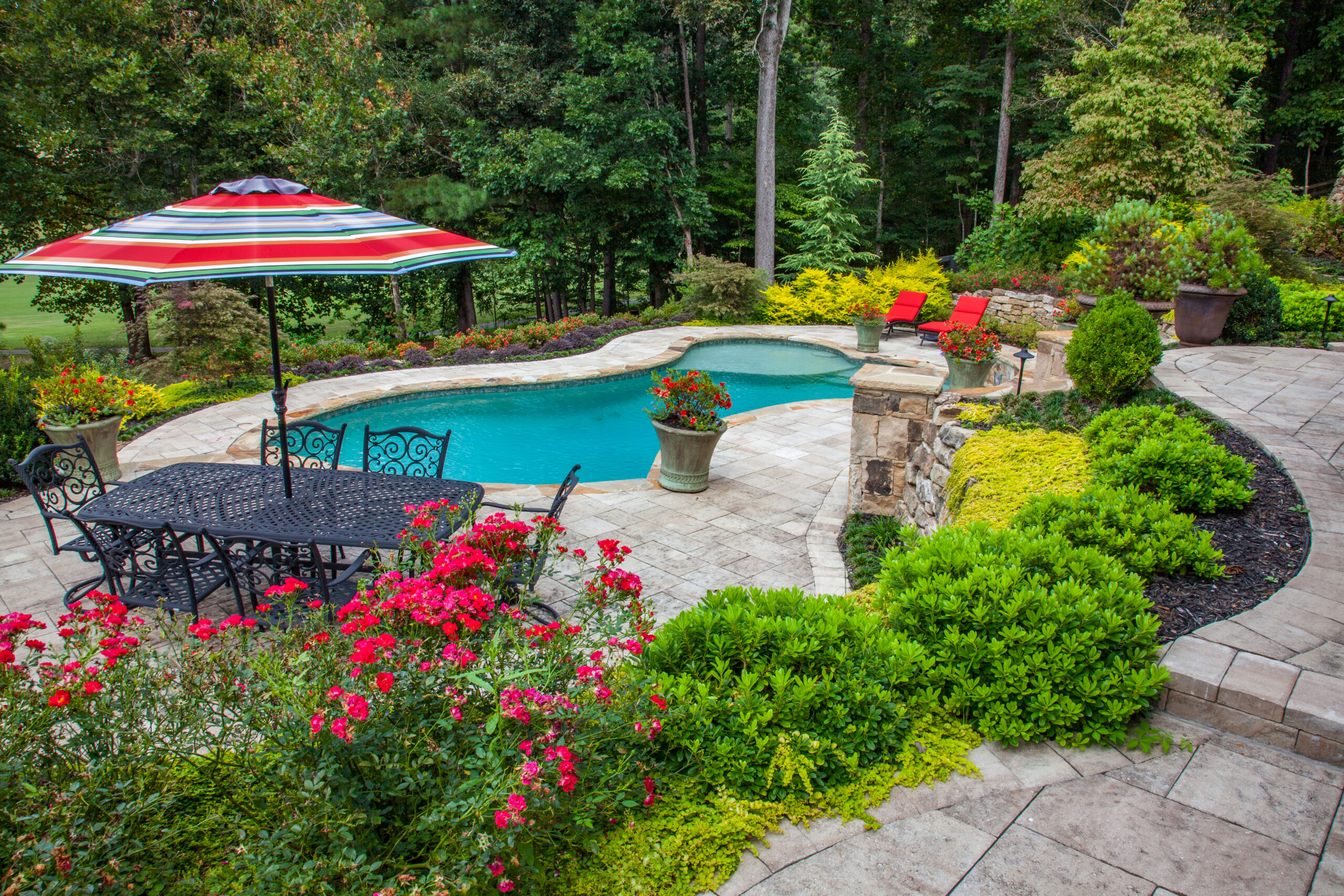
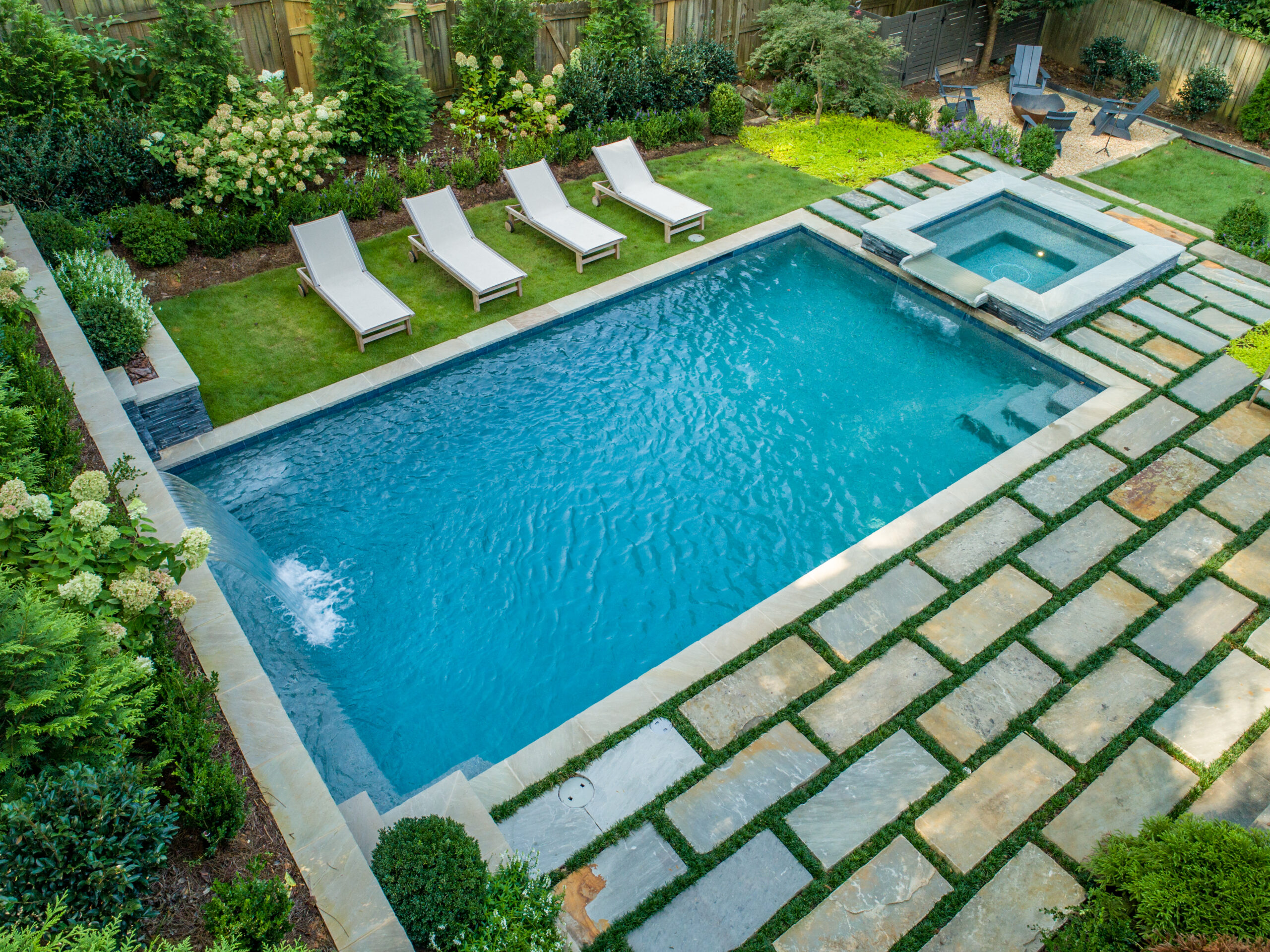
A custom pool feels finished when the surrounding parts are designed with it. The pool edge, spa, steps, wall, planting, lighting, and places to sit should read as one backyard instead of separate projects.
The shell, spa, tanning ledge, benches, and steps should be shaped around the house, sightlines, grade, and daily use.
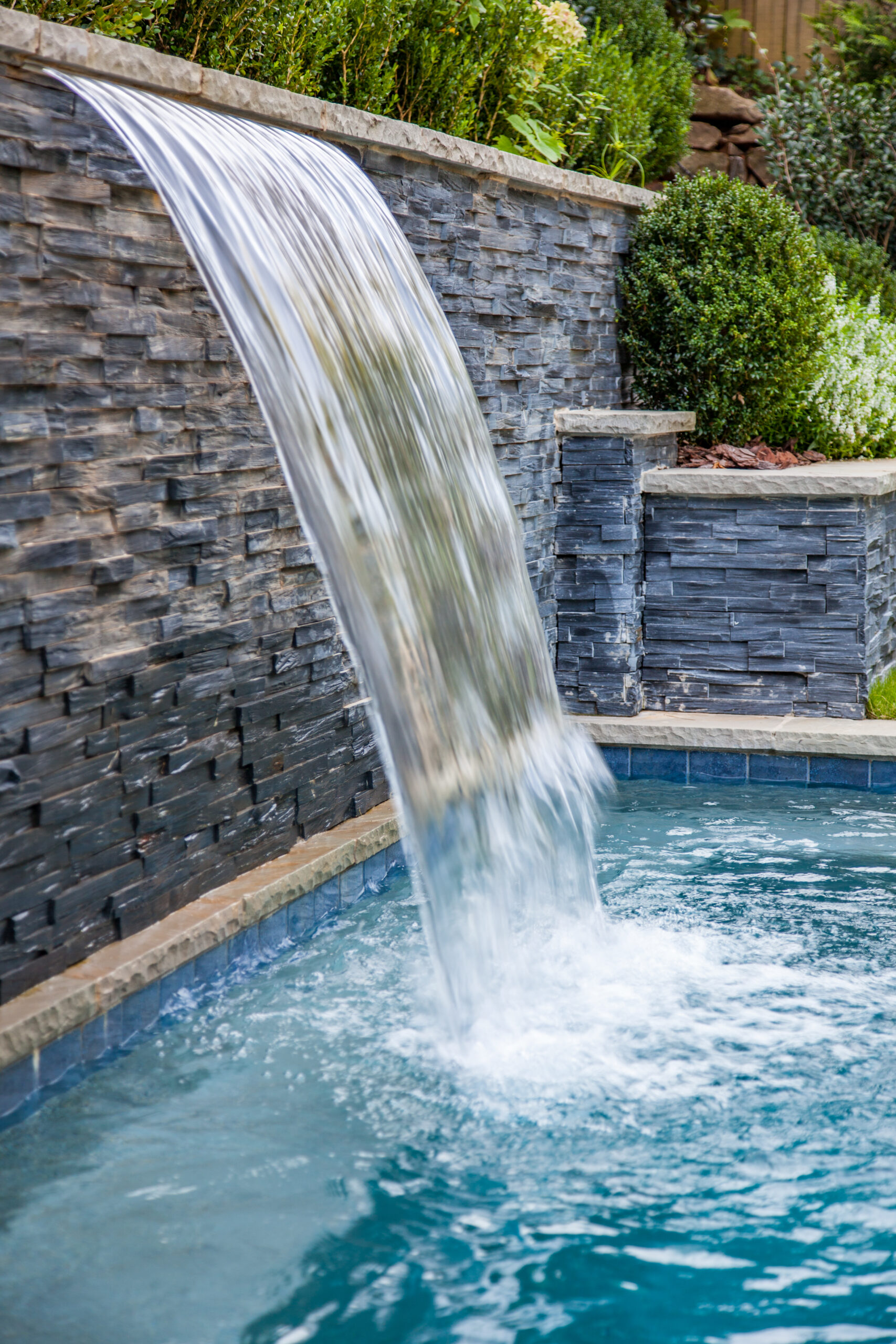
Waterfalls, scuppers, bubblers, fire bowls, and evening focal points need space for plumbing, power, views, and service access.
Coping, stone veneer, deck surface, steps, and seat walls decide how the pool feels underfoot and how the terrace meets the home.
Cabanas, kitchens, shaded dining, planting, and lighting turn the pool area into a place that works beyond the swim season.
Concept To Completion
The pool shell is only one part of the work. A strong design-build plan also handles the site, the comfort details, the surrounding hardscape, and what happens after startup.
Goals, views, slope, soil, access, trees, drainage, shade, and privacy are reviewed before the first concept is drawn.
Renderings and samples help compare shape, deck size, coping, spa placement, water features, and planting.
Engineering needs, local approvals, HOA requirements, utility locates, barrier planning, and inspection steps are built into the schedule.
Excavation, steel, shell work, plumbing, electrical, tile, coping, interior finish, equipment, fill, startup, and walkthrough are coordinated.
Integrated spas, fountains, waterfalls, scuppers, bubblers, fire bowls, heating, and controls can be planned early.
Pool decking, stonework, retaining walls, outdoor kitchens, cabanas, lighting, turf, lawn, planting, and privacy screening complete the yard.
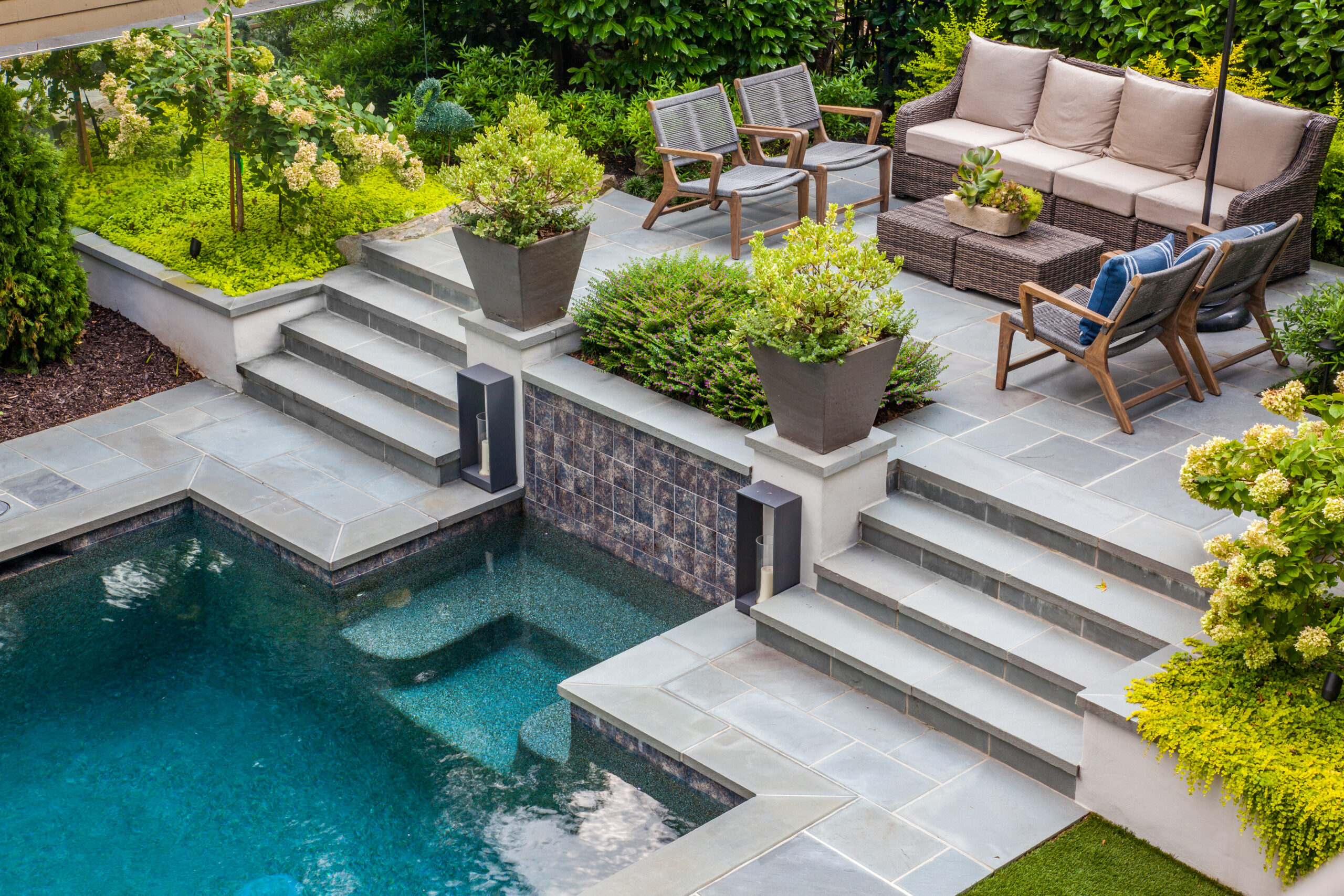
Shaped Around Daily Use
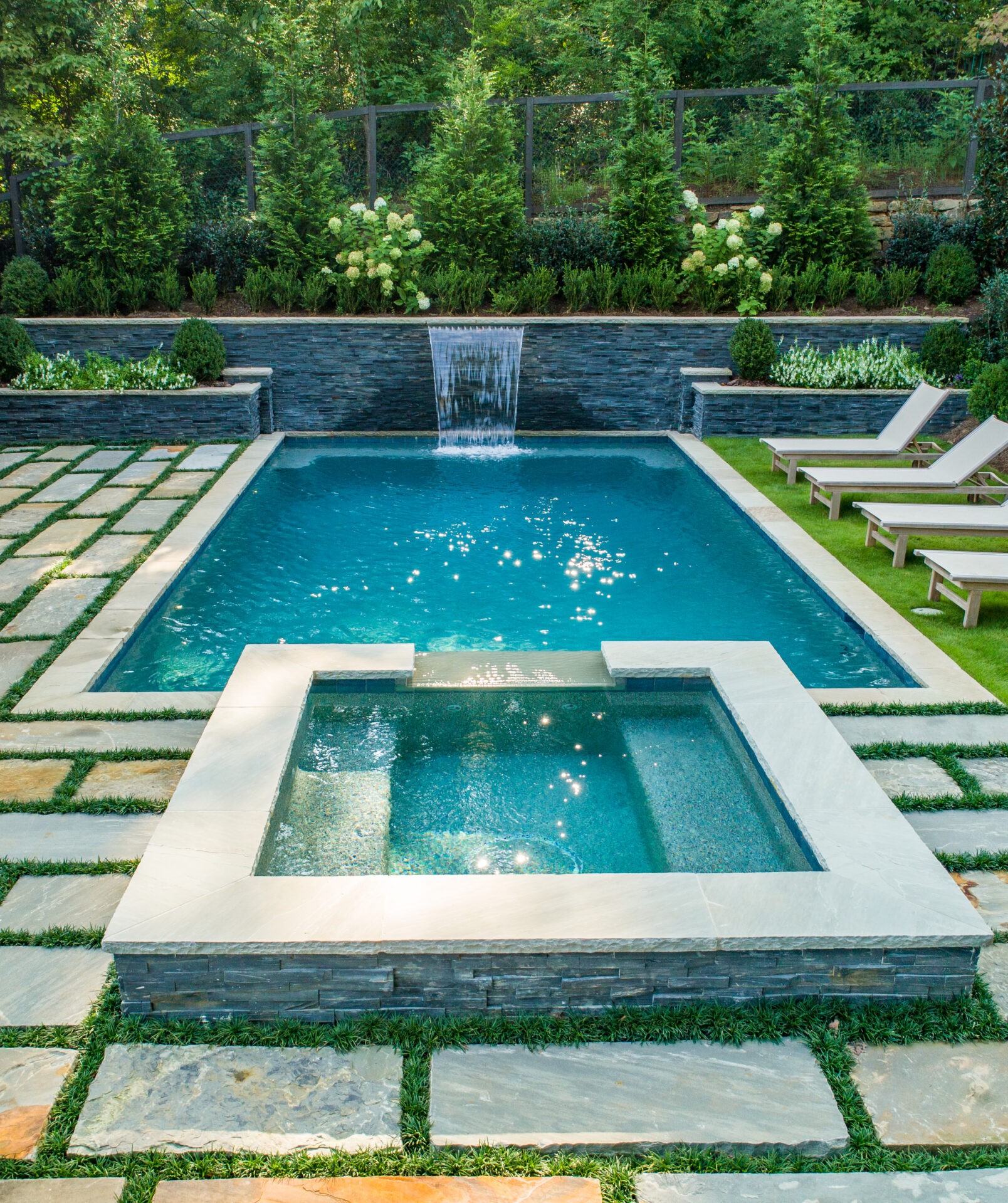
The right feature set depends on how the backyard will actually be used. A family pool, quiet spa retreat, entertaining pool, and architectural showpiece each ask for different depths, edges, decks, lighting, and gathering zones.
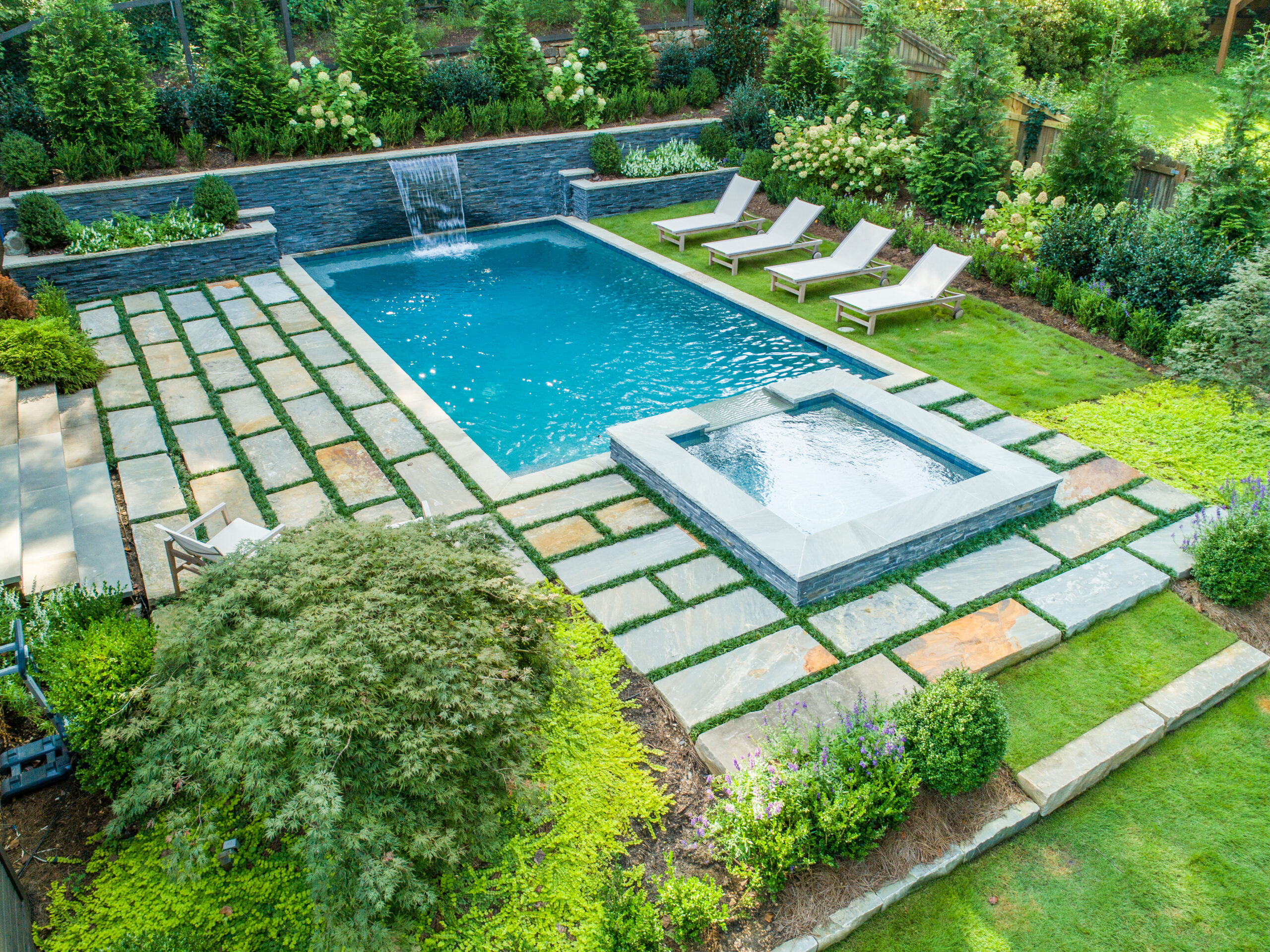
The Shell And The Site
Custom gunite pool construction gives the design team more freedom than a pre-formed shell. The pool can be shaped on site around architecture, grade changes, ledges, benches, spas, water features, and the poolside rooms around it.
Pool height, terrace height, steps, retaining walls, and house thresholds need to line up.
Decks, planting beds, roof water, and walls need a clean water path away from the pool area.
Decking and coping should be chosen for heat, slip resistance, drainage, and barefoot use.
Pumps, heaters, automation, and service access need to be screened without becoming hard to reach.
Designed For The Property
The best pool layout is rarely copied from another yard. Roswell, Alpharetta, Milton, Johns Creek, Sandy Springs, Marietta, Buckhead, and nearby North Atlanta properties bring different grades, tree cover, privacy needs, access limits, and outdoor living goals.
The pool may need retaining walls, steps, layered terraces, drainage planning, and careful equipment access.
Tree preservation, root zones, leaf drop, shade, and privacy screening affect pool placement and planting choices.
The pool should connect to the kitchen, porch, patio, fire feature, cabana, or lawn in a way that feels natural.
Permits, HOA standards, safety barriers, utility markings, and inspection timing belong in the plan early.
A Clear Path
A custom pool is a real construction project. The process works best when the design, approvals, shell, finishes, and surrounding landscape are sequenced together.
We review goals, grade, sun, trees, drainage, access, views, existing patios, and the way you want the backyard to work.
Site study, early pool placement, feature wish list, outdoor living connections, and budget direction.
The pool, spa, deck, coping, walls, planting, lighting, and gathering areas are developed into a visual plan with clear scope.
3D renderings, material direction, scope alignment, and proposal details before construction.
Engineering needs, local permitting, HOA submittals, utility locates, access planning, and construction sequencing are prepared.
Permit path, barrier planning, equipment layout, site protection, and schedule.
Excavation, shell work, plumbing, electrical, tile, coping, decking, equipment, water features, walls, lighting, and landscape work come together.
The visible finish and hidden infrastructure are managed as one backyard build.
We complete startup, review equipment, discuss care, and connect the finished pool with ongoing landscape support where needed.
Owner orientation, final punch list, care guidance, and next-step maintenance options.
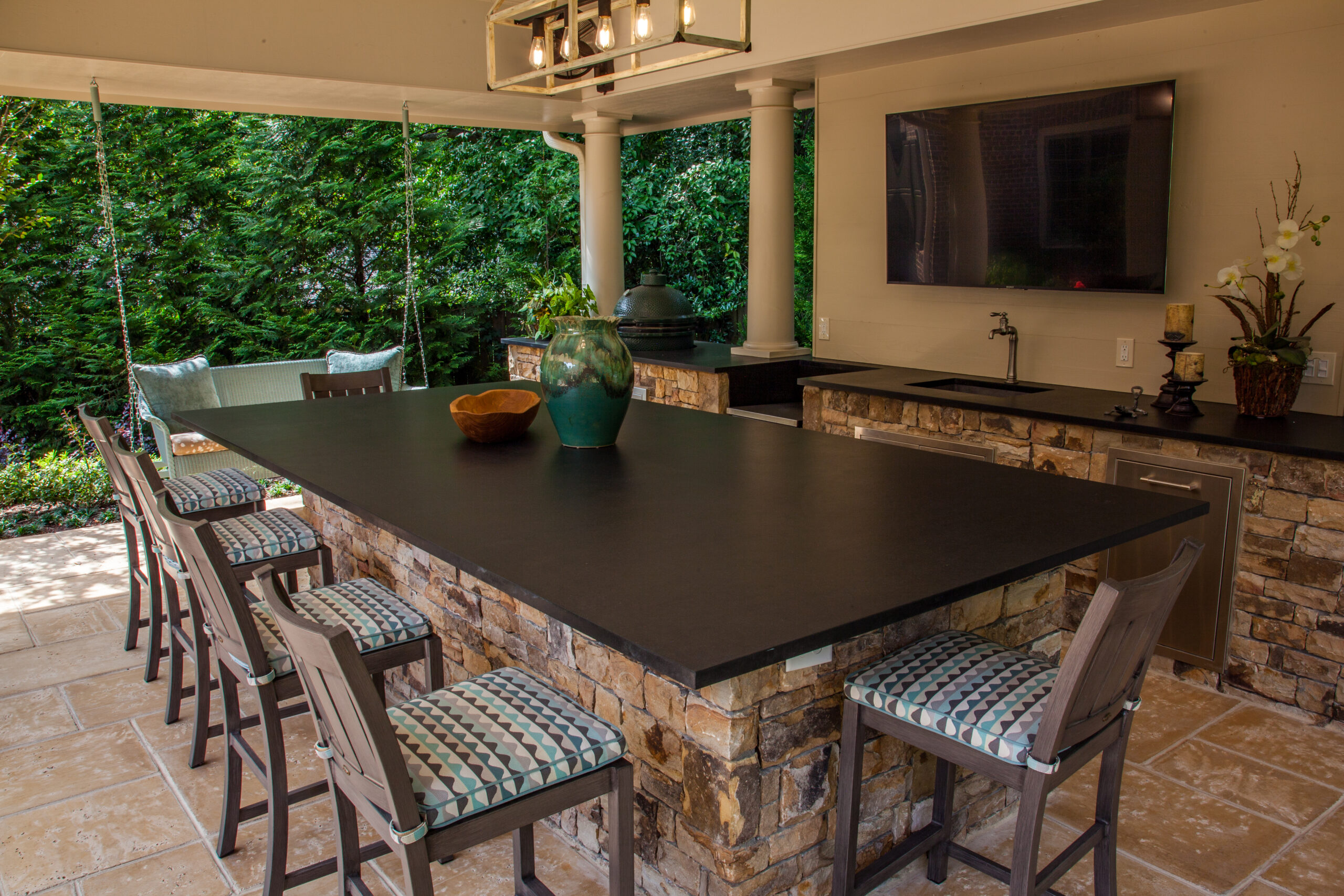
Permits, Utilities And Safety
Pool projects touch building review, utility marking, drainage, equipment, barriers, gates, septic or well conditions, trees, and final inspections. The safest design conversation starts with those constraints instead of treating them as paperwork at the end.
| Planning item | What the source says | Why it belongs in the design |
|---|---|---|
| Georgia pool code | Georgia DCA lists the 2024 International Swimming Pool and Spa Code with 2026 Georgia amendments as a current minimum code. | Code assumptions affect barrier, inspection, equipment, and construction planning. |
| Roswell review | Roswell points pool applicants to a residential pool plan review checklist. | Roswell pool projects should be scoped with permit documents in mind. |
| Sandy Springs review | Sandy Springs requires pool permits for new pool work and for some pool-deck repairs or modifications. | Decking, barriers, and pool work should be planned as connected scopes. |
| Milton site conditions | Milton calls for additional approvals when a pool property has a septic system, well, or water and sewer documentation issue. | Septic, wells, and backflow requirements can change pool placement and schedule. |
| Cobb County site plans | Cobb requires in-ground pool site plans to show items such as easements, utilities, setbacks, septic layout, buffers, floodplain limits, and erosion controls. | Marietta and East Cobb-area projects often need drainage and site documentation built into the plan. |
| Utility marking | Georgia 811 says to submit a dig ticket at least three business days before digging and check utility responses before work starts. | Pool excavation, trenching, electrical, and gas planning all depend on known utility locations. |
| Pool barriers | Pool Safely recommends a four-foot barrier around pools and spas, with a self-closing, self-latching gate. | Fences and gates affect sightlines, circulation, planting, and how the pool connects to the yard. |
| Drowning prevention | CDC reports that four-sided isolation fencing can reduce a young child's drowning risk by 83% compared with three-sided property-line fencing. | Barrier planning is a design and safety decision, not just a code box. |
| Pool equipment | ENERGY STAR says variable-speed and multi-speed pool pumps can reduce energy cost, run quieter, and support slower circulation. | Equipment choices affect operating cost, placement, sound, screening, and service access. |
Sources: Georgia DCA, Roswell pool permit FAQ, Sandy Springs pool permits, Milton pool permits, Cobb pool inspections, Georgia 811, Pool Safely, CDC, and ENERGY STAR.
Proof Before Persuasion
A homeowner should be able to identify the company, review the work, understand who is involved, and know the next step before filling out a form.
People Behind The Plan
A custom pool changes how a property is graded, used, planted, lit, and maintained. Homeowners deserve to know who is shaping those decisions before design work begins.
Finished Work
Finished project examples help homeowners see how pool, stone, planting, seating, and water features come together around the home.
Pool, retaining wall, flagstone coping, paths, and planting are visible in the project imagery.
View projectPool, stone slab coping, seating terrace, and layered poolside planting are visible in the project imagery.
View projectPool, attached spa, fountain, stonework, and fire area are visible in the project imagery.
View projectWhat Clients Notice
LSG testimonials emphasize creativity, practical guidance, careful execution, and confidence in the finished outdoor space. Those themes show what clients value most once the backyard is built and in use.
Clients point to creativity, practical expertise, and care for the finished result.
Clients describe the portfolio and first consultation as reasons they felt confident choosing the team.
Clients mention one-stop project responsibility and easier coordination across the work.
Where We Build
Landscape Studio Group designs and builds poolside environments for homeowners throughout Roswell and nearby North Atlanta communities. Each area brings different lots, architecture, approval paths, and backyard goals, so the service-area content should speak to real conditions instead of only listing city names.
Custom pools, spas, water features, and planting plans for established neighborhoods, wooded lots, and outdoor rooms tied to the home.
Pool design-build planning for larger backyards, entertainment spaces, cabanas, outdoor kitchens, and premium finishes.
Pool layouts that respect acreage, mature tree cover, privacy, grade, drainage, and quiet resort-style use.
Poolside spaces planned around family use, lawn transitions, patios, shade, safety barriers, and landscape maintenance.
Custom pool planning for sloped yards, tight access, terrace connections, retaining walls, and view-driven outdoor living.
Pool and landscape integration for established homes where walls, drainage, shade, and access need early planning.
Detailed poolside design for compact luxury yards, privacy, architecture, hardscape, lighting, and entertaining spaces.
Pool, patio, and outdoor living projects for growing North Atlanta-area homes with room for phased backyard plans.
Pool builder, pool design, and poolside landscape planning for homeowners who want the full backyard handled together.
Answered Simply
It includes site study, pool layout, 3D renderings, construction planning, decking, coping, stonework, lighting, planting, water features, spa options, startup guidance, and related outdoor living details.
Public 2026 pricing sources support a planning range of about $85,000-$120,000 for a straightforward custom gunite pool and $150,000-$350,000+ for larger luxury pool projects with premium finishes, spa, water features, decking, walls, lighting, and outdoor living work. These are planning benchmarks, not a fixed Landscape Studio Group quote.
Gunite pools often cost more because they are built around custom shapes, steel, plumbing, shotcrete or gunite shell work, finish selections, spas, tanning ledges, benches, raised walls, water features, and site-specific design needs. Fiberglass and vinyl pools can be useful price comparisons, but they do not always fit the same backyard goals.
Regional custom pool pricing sources place raised spas with spillover around $20,000-$45,000, depending on structure, heating, plumbing, controls, finish details, and how the spa connects to the pool and deck.
Features that can raise the total include a spa, tanning ledge, premium interior finish, water feature, fire feature, automation, LED lighting, heater, pool cover, travertine coping, paver or stone decking, retaining walls, outdoor kitchen, cabana, drainage, and landscape restoration.
They should be clearly stated. A pool estimate may include some restoration, but decking, drainage, retaining walls, planting, sod, turf, irrigation repair, lighting, and outdoor living work should be separated so the homeowner knows what is included and what is excluded.
Yes. Local requirements vary, but pool projects should be planned around permit review, site plans, inspections, utility locates, safety barriers, gates, equipment, and any HOA, septic, well, tree, drainage, or easement conditions that apply to the property.
Georgia 811 says a dig ticket should be submitted at least three business days before digging and utility responses should be checked before work starts. Pool excavation, trenching, gas, electrical, and drainage work depend on known utility locations.
The deck, walls, planting, steps, lighting, privacy, and outdoor rooms determine how the pool works every day. Planning them with the pool helps avoid awkward grades, cramped seating, drainage problems, and unfinished transitions after the pool is built.
It can, but the design has to account for retaining walls, steps, terraces, drainage, construction access, tree preservation, roots, leaf drop, privacy, and equipment placement. Those decisions can affect the pool shape, timeline, and budget.
Compare the full scope: design process, site planning, gunite or concrete experience, drainage, deck area, coping, equipment, controls, permitting, safety barriers, project photos, team details, financing, warranty documentation, and who owns the surrounding backyard work.
Landscape Studio Group's financing page says the company works with Hearth and Lyon Financial to help homeowners review monthly payment options for landscape and pool projects.
Start The Plan
Start with a consultation. We will study your yard, talk through how the pool should work with the house and landscape, and shape a plan before construction begins.
Landscape Studio Group - Poolside - Info@landscapestudiogroup.com - 470-669-3965 - Serving Roswell and North Atlanta. Final permit, code, and safety requirements should be confirmed with the local authority for the property.