
Hardscape Design in Atlanta: Pavers, Paths, and Patios Built to Last
Durability is not a property of the surface. It comes from the base below it, the water around it, and the grades it connects — which is why material is one of the last decisions, not the first.
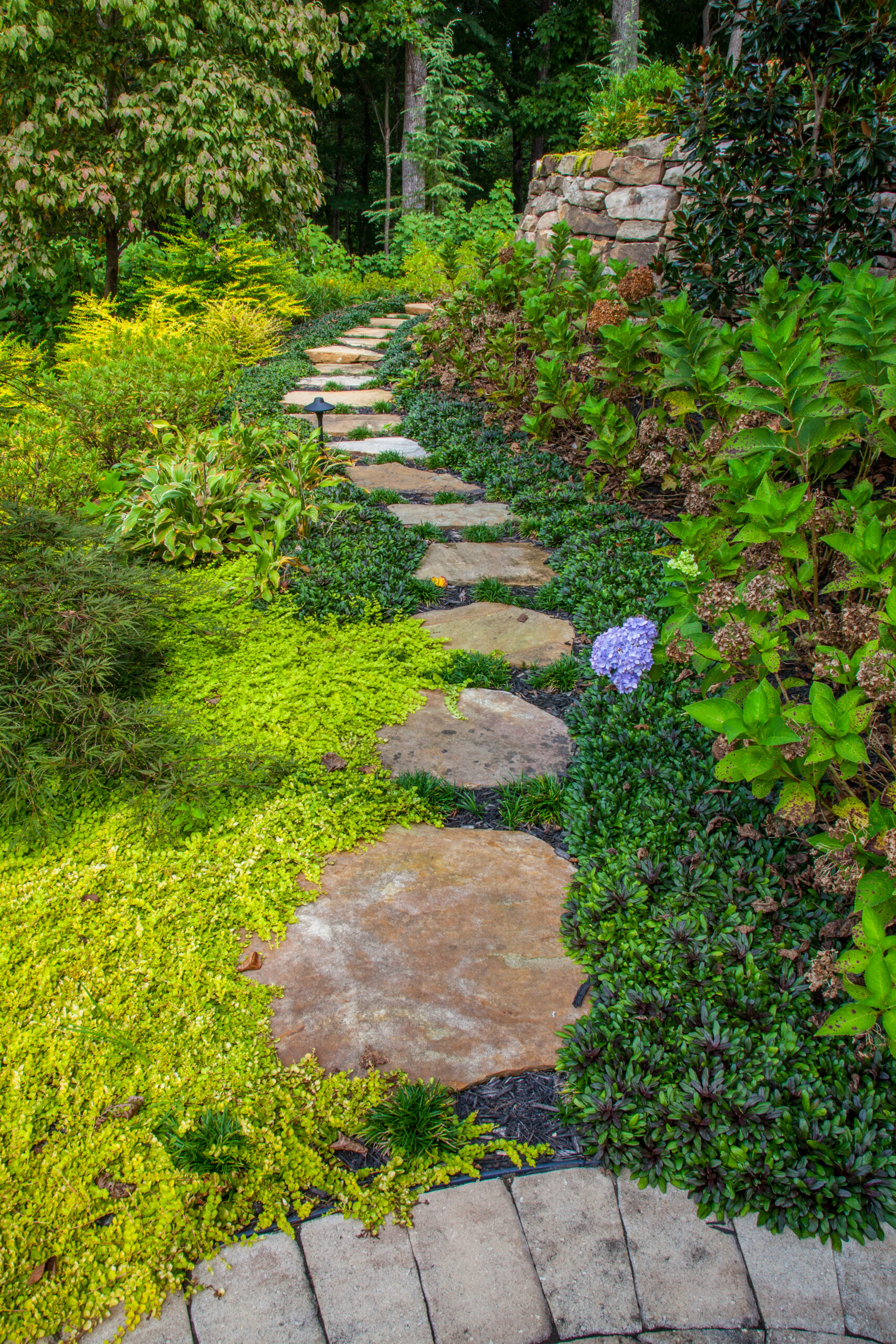
Paths decide how people move through a property. Getting that right does more for daily use than any single material choice.
In this article
The short answer
Hardscape design in Atlanta should plan pavers, paths, patios, base preparation, drainage, edges, steps, lighting, planting, and how people move through the yard together. Lasting hardscape is not only about the surface material. It depends on the base below it, the water around it, the grades it connects, and whether the layout fits how the space will actually be used.
Hardscape is the structure of outdoor living
Planting gives a yard life. Hardscape gives it structure. Paths decide how people move. Patios decide where people sit. Pavers, brick, stone, steps, walls, and edges decide how outdoor rooms connect to each other. In Atlanta, that structure also has to respect drainage, clay soil, shade, tree roots, slope, and heavy summer rain.
Our outdoor living services group paving and paths, brickwork, retaining walls, decking, kitchens, lighting, water features, and stylized gardens together, and that grouping is deliberate. A patio that ignores planting feels hard. A garden without paths feels unfinished. A pool without the right deck feels awkward. The pieces should shape one experience rather than four separate purchases.
The surface is only the visible layer
Most hardscape failures start below the surface. Poor base preparation, weak compaction, missing edge restraint, bad drainage, and soil movement will make an expensive surface shift, settle, or hold water. The right material still needs the right installation system underneath it. Ask any contractor about base depth, compaction method, drainage, edge treatment, joint material, and how water leaves the patio — the answers separate a crew from a builder.
Material selection should then follow the setting. Brick reads naturally around traditional homes and garden walls. Natural stone softens a wooded property. Concrete pavers offer consistent shapes and cleaner geometric lines. Stepping stones guide movement through planting without making a garden feel paved over.
| Material or feature | Where it works well | Planning watchout |
|---|---|---|
| Brick | Terraces, garden walls, traditional homes, paths, and edges. | Needs proper base, drainage, and freeze-aware installation. |
| Natural stone | Wooded yards, pool transitions, garden paths, and premium patios. | Thickness, texture, heat, and slip feel should be reviewed in person. |
| Concrete pavers | Patios, driveways, pool decks, paths, and geometric layouts. | Base and edge restraint decide long-term performance. |
| Stepping paths | Garden movement, side yards, and softer transitions. | Spacing, drainage, lighting, and ground cover all matter. |
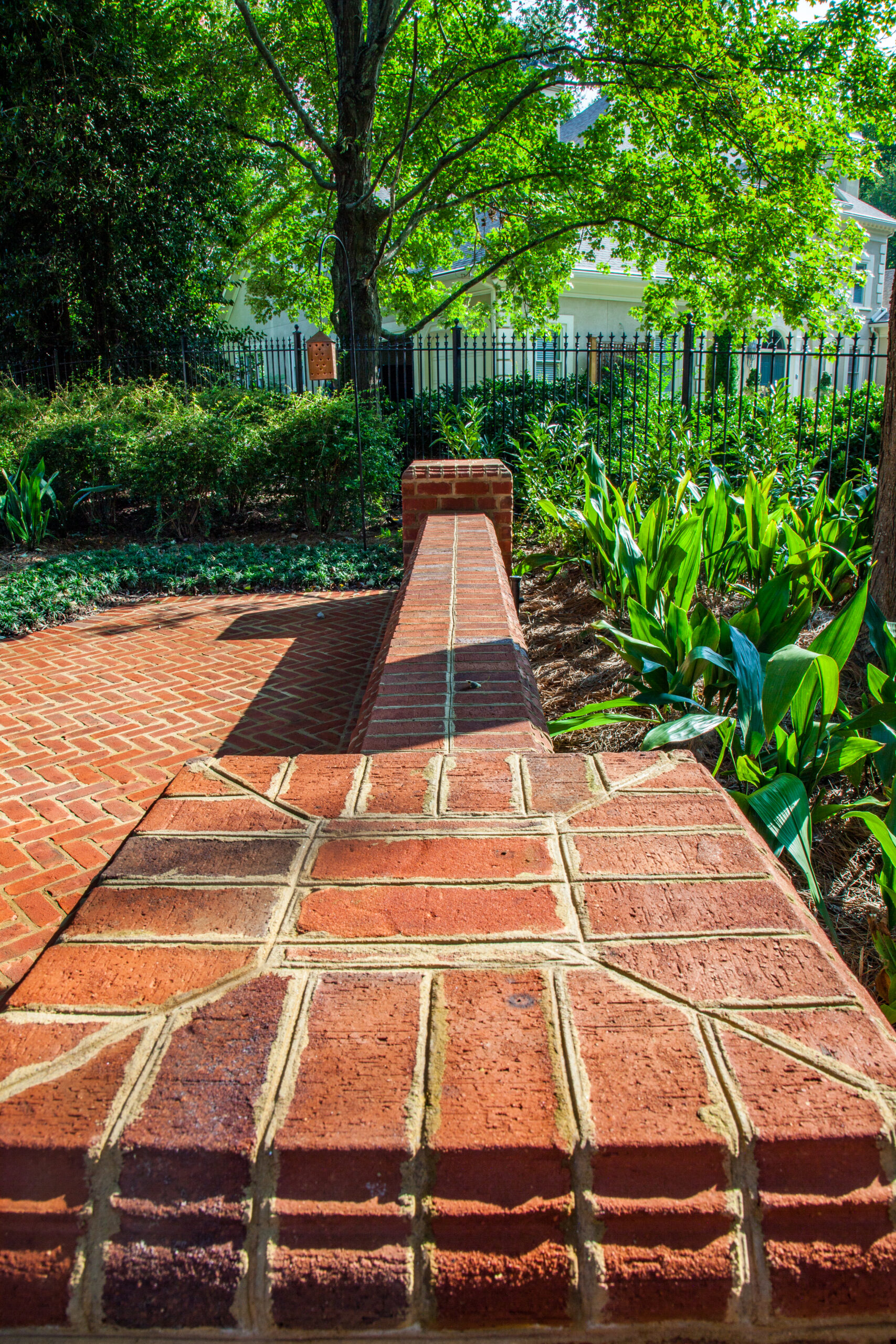
Edges finish the work. A terrace held by a wall, softened by planting, and lit for evening use reads as one designed space.
Drainage should be designed into every patio
Water is the test every hardscape has to pass. A patio should not pitch water toward the house, trap puddles at a door, push runoff into planting beds without a plan, or send water onto a neighbor's property. Paths should not become streambeds after a storm. Steps should not collect silt. Edges should not crumble because water is quietly washing base material out from under them.
A hardscape plan should show where water goes during a heavy rain. Sometimes the answer is subtle grading. Sometimes it is a drain, swale, permeable surface, wall drain, or a broader yard drainage plan. On sloped lots the surface and the structure holding it are the same problem — our guide to retaining walls in Roswell GA covers how grade and water get resolved together. UGA's water-wise landscape guide for the Georgia Piedmont is a useful primer on how water behaves in our soils.
Design for movement, not just a photograph
A patio can look beautiful from above and still fail daily use if it is too small, too isolated, too hot, too exposed, or disconnected from the door, kitchen, pool, or fire feature. The path from house to patio matters. The clearance around furniture matters. The view from inside the home matters. Lighting matters the moment the sun drops.
Ask where people will walk carrying food, towels, drinks, firewood, garden tools, or pool gear. Those small repeated movements decide whether the hardscape feels natural or becomes a workaround you notice every weekend. Where a pool is involved, the deck and the shell should be planned as one surface through our poolside services rather than sequenced as separate trades.
Hardscape planning checklist
- Start with use. Dining, lounging, pool access, garden walking, fire seating, and cooking all need different dimensions.
- Map movement. Connect doors, gates, pool, kitchen, seating, lawn, and garden destinations before drawing an edge.
- Solve water. Identify slopes, low spots, roof runoff, downspouts, drains, and where the water finally leaves.
- Choose material by site. Match heat, texture, architecture, maintenance, and design character to the property.
- Plan the edges. Steps, walls, planting, lighting, and furniture should finish the hardscape, not land around it at random.
Questions worth asking before installation
Because most of what determines lifespan is buried, a few specifics are worth getting in writing during design rather than discovering in year three. Ask what base depth is being used and how it will be compacted. Ask how the perimeter is restrained, since an unheld edge is where paver fields begin to spread. Ask what goes in the joints and how that material behaves after a few Georgia summers.
Layout deserves the same attention. Cut pavers should land where they are least visible, not across the main sightline from the back door. Irrigation lines and tree roots under a proposed path should be located before excavation, not found by a shovel. And it is fair to ask what counts as normal settlement versus a callback, so expectations are shared before anything is installed.
Protect the yard that stays
Hardscape is built in stages, and every stage brings material and equipment across ground that has to survive the process. Trees, irrigation, drainage outlets, masonry, and lawn all need a protection plan before staging begins.
Frequently asked questions
What is hardscape design?
Hardscape design plans the non-plant parts of an outdoor space, including patios, pavers, paths, steps, walls, decks, edges, and outdoor living structures.
What hardscape material lasts longest?
Longevity depends on material, base preparation, drainage, installation, traffic, maintenance, and site conditions. A well-installed paver outlasts a poorly installed stone every time, so the best choice depends on the property.
Do patios need drainage?
Yes. Patios should be graded or drained so water moves away from the house, seating areas, steps, and planting beds without creating erosion.
Should paths and patios be planned with planting?
Yes. Hardscape and planting should be designed together so paths feel natural, patios are softened, and the whole yard works as one space.
Built to be lived on
Hardscape should make a yard easier to live in and better to look at every day of the year. Landscape Studio Group plans patios, paths, pavers, drainage, planting, and outdoor rooms as one connected design rather than a sequence of separate installations.
Walk the space with us
Bring photos of where water collects after a storm and how you move between the house and the yard. That is usually where the design starts.