
Custom Putting Green Installation in Atlanta: Design, Cost, and What to Expect
A custom putting green in Atlanta should be designed around the way you practice, the shape of your yard, and the drainage under the surface.
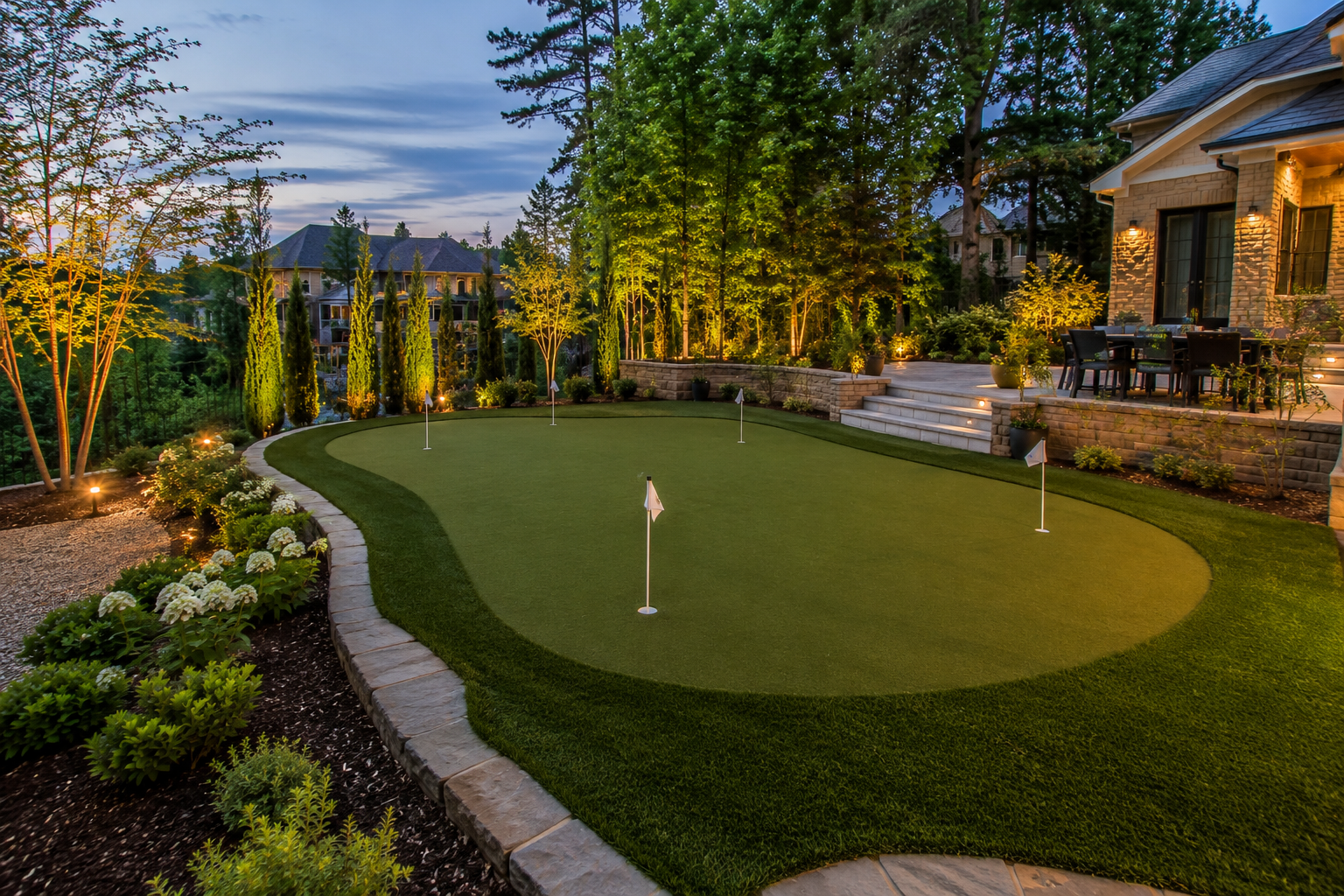
A custom putting green can become a focal point of the landscape while providing a dedicated practice space for golfers of all skill levels.
In this article
The short answer
For 2026 planning, HomeGuide lists artificial grass at $10 to $25 per square foot installed, and it notes that putting green turf uses shorter, denser fibers than standard landscape turf. Use that as a turf benchmark only. A true custom putting green budget also depends on base prep, contours, cup count, fringe, chipping areas, access, drainage, lighting, and how the green ties into the rest of the landscape.
In Roswell and North Atlanta, putting greens are rarely just a golf feature. They often become part of a larger backyard: pool, fire pit, patio, outdoor kitchen, play area, garden path, or low-maintenance turf zone. When the green belongs to the whole design, it looks intentional rather than recreational equipment placed in the lawn.
What makes a putting green custom?
A custom putting green is shaped for your yard and your game. The size, speed, slope, hole placement, fringe, and surrounding landscape all matter. A simple rectangular mat can give you a place to roll a ball, but it will not feel like a designed outdoor room. A custom green can create short putts, breaking putts, wedge practice, and a destination that looks good from the patio.
The design starts with how you will use it. Do you want daily practice? A social feature near the pool? A compact green for kids and guests? A serious practice surface with multiple breaks and a chipping area? Those answers shape the footprint and budget.
Backyard putting green cost drivers in Atlanta
Artificial grass benchmarks are helpful because most residential putting greens use synthetic turf. HomeGuide's 2026 artificial grass cost guide lists artificial grass at $10 to $25 per square foot installed. It also notes that putting green turf is a specialty turf type with shorter, denser fibers for golf practice.
A custom putting green may sit within or above that broad turf benchmark depending on complexity. The cost drivers include the turf product, excavation, aggregate base, compaction, contour shaping, cup installation, fringe turf, edging, drainage, seams, access, and surrounding hardscape or planting. If you are comparing installers, ask what is included below the turf. The base, drainage, contour work, and edge detail are what make the green play well and age cleanly in Atlanta clay soil.
Small, simple greens cost less than larger greens with multiple cups, undulation, fringe, chipping areas, bunker-style features, lighting, or stone borders. The most important budget question is not just how large the green should be. It is how realistic, durable, and integrated you want it to feel.
Design choices that matter
Size and shape
A small green can be surprisingly useful if it is shaped well. For many Atlanta homes, a compact green near a patio or side yard is enough for daily practice and casual use. Larger properties may support a sweeping green with multiple holes, fringe, and a chipping approach.
Shape should respond to the yard. Curves can look natural in a garden setting, while clean geometric lines may fit a modern pool or patio design. The green should be visible enough to invite use but not so dominant that it overwhelms the landscape.
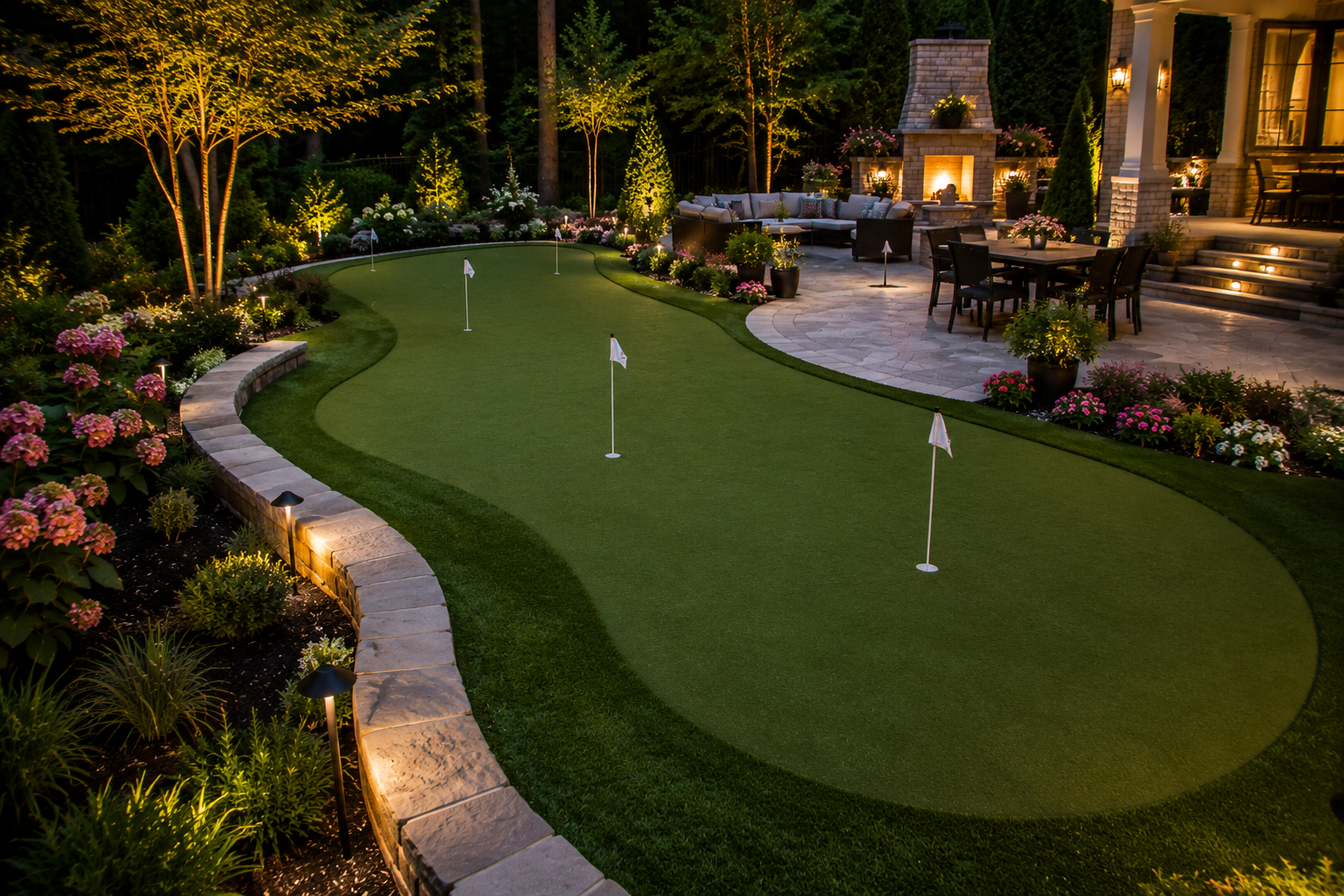
A well-designed putting green should complement the landscape while remaining convenient and inviting to use.
Slope and speed
Putting a green slope is both an art and a practical construction issue. Too flat, and the green becomes boring. Too severe, and it becomes frustrating. The goal is to create putts that are interesting but fair.
Speed depends on turf selection, infill, installation, and maintenance. Some homeowners want a faster practice surface. Others want a more forgiving recreational green. We talk through that expectation early because it affects product selection and shaping.
Cups, fringe, and chipping areas
One cup can be enough for a compact green, but multiple cups create variety. Fringe gives the green a more finished golf-course look and lets you practice from just off the surface. A chipping area adds another layer of use, but it requires more space and careful safety planning.
The surrounding area matters too. Stone edging, planting beds, seat walls, paths, or a nearby patio can make the green feel like a permanent landscape feature rather than a standalone patch of turf. This is where a design-build approach matters: design renderings and portfolio context can show how the green belongs to the whole backyard.
Atlanta site conditions: drainage, clay, and shade
Drainage is the backbone of a good putting green. Atlanta's clay soil and heavy summer rain make base preparation essential. A properly installed green typically requires excavation, a compacted aggregate base, grading, and a plan for moving water away from the surface.
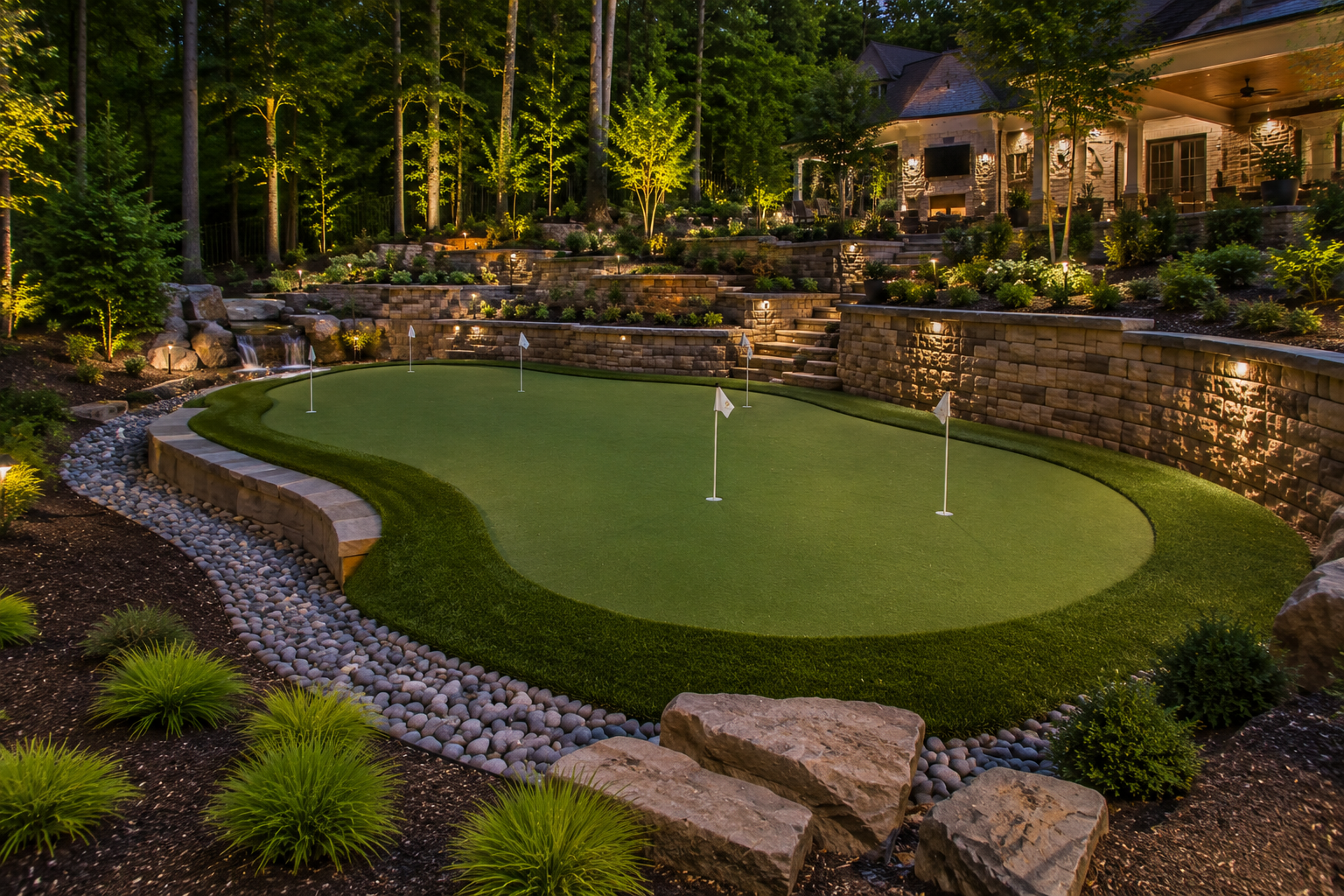
Proper drainage and base preparation are essential for long-term putting green performance in Georgia clay soils.
If water sits under the green, the surface can shift, smell, or wear poorly. If the grade sends water toward the house, patio, or pool deck, the whole backyard can suffer. The green should be part of a larger drainage plan, especially on sloped North Atlanta lots.
Shade also matters. Artificial Putting Green do not need sunlight to grow, which makes them useful where real grass struggles. But shaded areas collect leaves, pollen, and organic debris, so maintenance access should be considered.
Where to place a backyard putting green
The best location balances convenience, visibility, safety, and drainage. Near a patio, the green becomes social. Near a side yard, it can turn unused space into daily practice. Beside a pool, it adds resort energy, but the design needs to manage wet traffic and barefoot comfort. In a larger lawn, it can become a destination connected by stone paths and planting.
Avoid placing a green where every missed chip risks a window, pool, outdoor kitchen, or neighbor's property. If chipping is part of the goal, the design needs safe angles, enough landing area, and clear boundaries.
Lighting and evening use
A putting green can be a great evening feature when lighting is designed correctly.
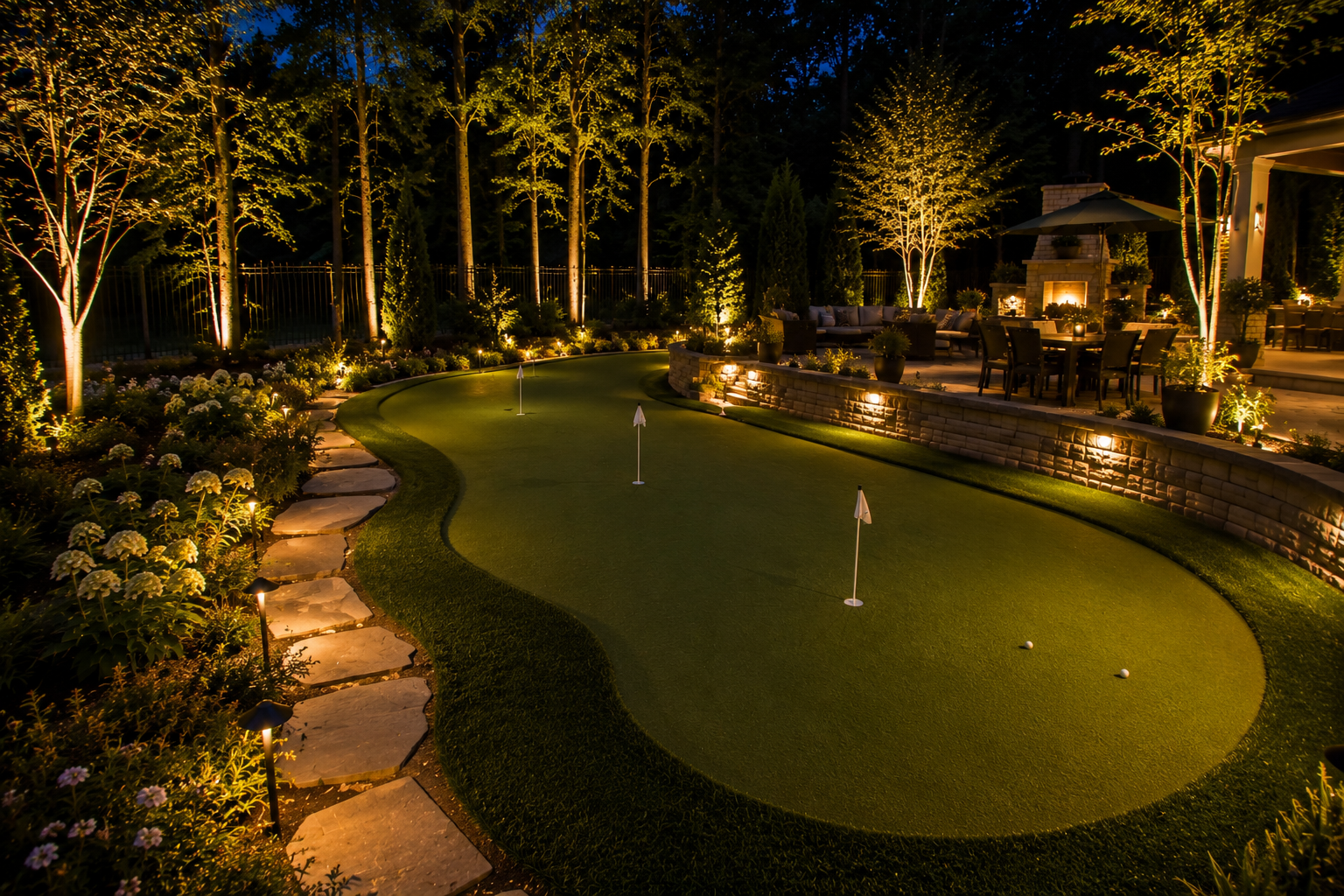
Warm landscape lighting extends the usability of a backyard putting green while enhancing the surrounding outdoor environment.
Low-level, warm, targeted lighting can illuminate the surface and path without glare. DarkSky's outdoor lighting principles are useful here: light should be useful, targeted, low level, controlled, and warm-colored.
For North Atlanta homes, lighting can also connect the green to the larger outdoor environment. A path from the patio, soft uplighting in nearby trees, and subtle edge lighting can make the green feel like part of the landscape after dark.
What to expect during installation
A typical custom putting green project begins with consultation and site review. We look at access, grade, drainage, views, nearby outdoor rooms, and how the green fits the property. From there, the design can be refined with layout drawings or design renderings.
Installation usually includes marking the shape, removing existing grass or soil, preparing and compacting the base, shaping contours, installing cups, laying and securing turf, adding infill, finishing seams and edges, and restoring the surrounding landscape. If the green is part of a larger project, it may be sequenced with patios, walls, lighting, planting, irrigation changes, or pool work.
Frequently asked questions
How much does a custom putting green cost in Atlanta?
Use artificial grass benchmarks of $10 to $25 per square foot installed as an early reference, then adjust for putting-green turf, base prep, contours, drainage, cup count, fringe, access, lighting, and surrounding landscape work. A consultation is needed for a real local number.
Is artificial turf good for putting greens in Georgia?
Yes, synthetic putting green turf is common because it stays playable without mowing and can work in shaded or high-use areas where real putting surfaces would be difficult to maintain. Proper base prep and drainage are essential in Georgia clay soil.
Can a putting green be added to an existing backyard?
Yes. It can be added to an existing lawn, side yard, pool area, or patio zone. The main considerations are access, drainage, safe ball flight if chipping is included, and how the green ties into the current landscape.
How do you maintain a backyard putting green?
Maintenance usually includes removing leaves and debris, occasional brushing, rinsing as needed, checking infill, and keeping edges clear. Pet use, tree cover, pollen, and foot traffic can increase the maintenance routine.
Build a green that belongs in the landscape
A custom putting green should be fun, useful, and beautiful from the house. If you are considering one for an Atlanta, Roswell, or North Atlanta home, Landscape Studio Group can help you shape the design, understand the site, and build a green that feels like part of a complete outdoor living plan.
See greens in finished projects
Use this article as a planning brief, then explore how putting greens fit inside completed outdoor living projects.