
Artificial Turf vs Real Grass in Georgia: What's Right for Your Yard?
Artificial turf is best for Georgia yards where real grass struggles because of shade, pets, heavy foot traffic, small play zones, or drainage-controlled spaces. Real grass is better when you want a cooler, living lawn, lower upfront cost, and a traditional landscape that supports soil life and seasonal change.
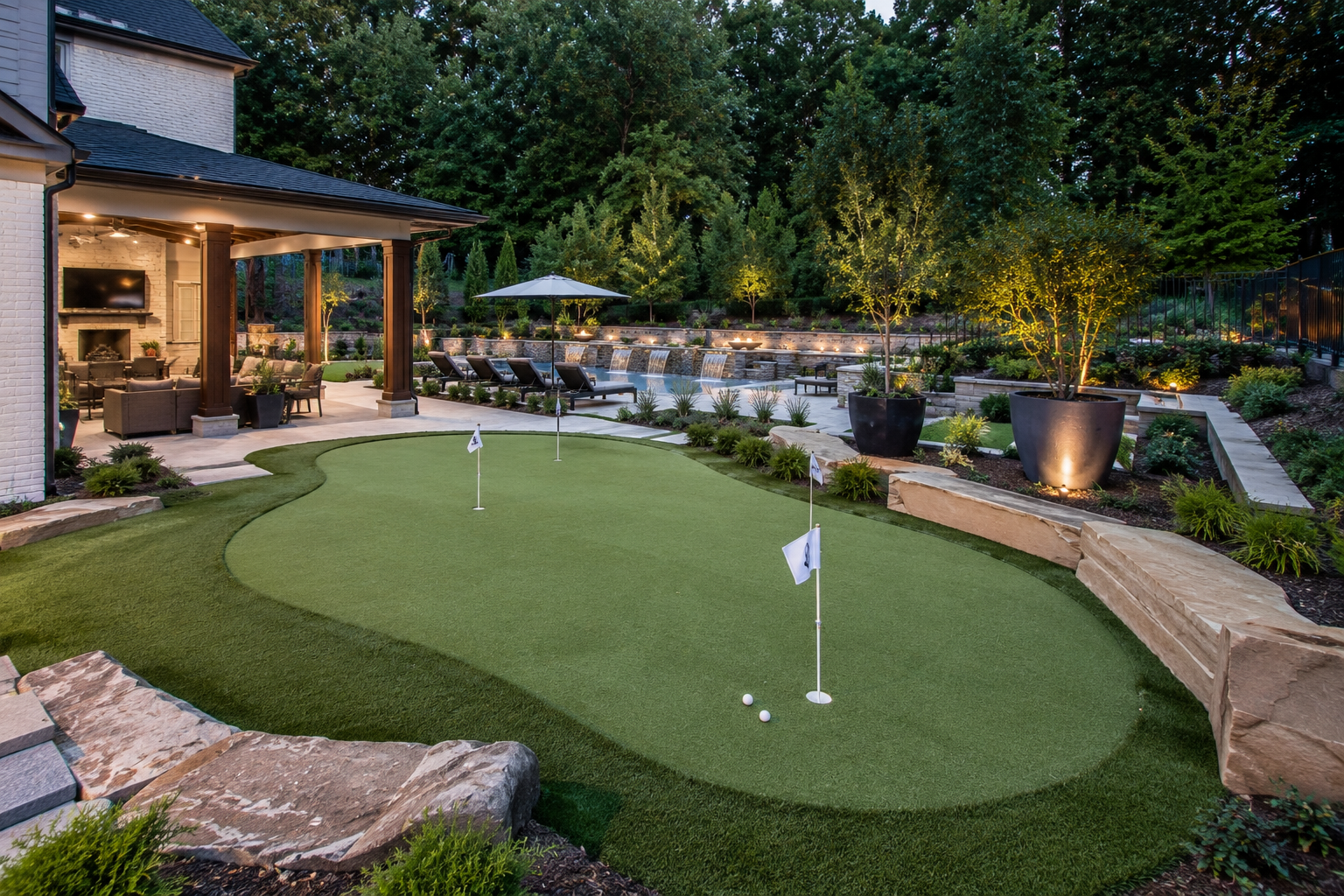
A complete low-maintenance North Atlanta backyard with artificial turf and a putting green.
In this article
The short answer
For 2026 planning, HomeGuide lists artificial grass at $10 to $25 per square foot installed, while new sod is benchmarked at $1 to $2 per square foot installed and resodding at $1.50 to $4 per square foot. Those are national benchmarks, not a Landscape Studio Group quote.
In Roswell and North Atlanta, the right answer often is not all turf or all grass. Many of the best yards use a hybrid approach: real lawn where it can thrive, turf where durability matters, and planting beds, paths, trees, drainage, and lighting to make the whole yard feel designed.
Artificial turf vs real grass: the Georgia yard problem
Georgia is not always gentle on lawns. Heat, humidity, heavy summer rain, clay soil, shade from mature trees, deer traffic, pet use, and weekend traffic all affect whether grass looks good in real life. The fastest way to make the right choice is to judge each zone separately: turf for problem areas, real grass for larger sunny lawns, and planting or hardscape where neither surface is the honest answer. A front lawn with full sun and irrigation has different needs from a shaded backyard under hardwoods. A pet run has different needs from a quiet ornamental lawn.
That is why we start with the site. Where does water go after a storm? How many hours of sun does the area receive? Is the soil compacted? Will kids or dogs use it every day? Do you want green year-round, or are you comfortable with warm-season grass going dormant in winter? The surface should match the way the space is used.
Artificial turf: where it works well
Artificial turf works especially well in small, high-use areas where real grass gets beaten down. Think side yards, pet zones, play areas, pool-adjacent strips, shaded courtyards, rooftop-style terraces, and modern backyards where a clean green surface is part of the design.
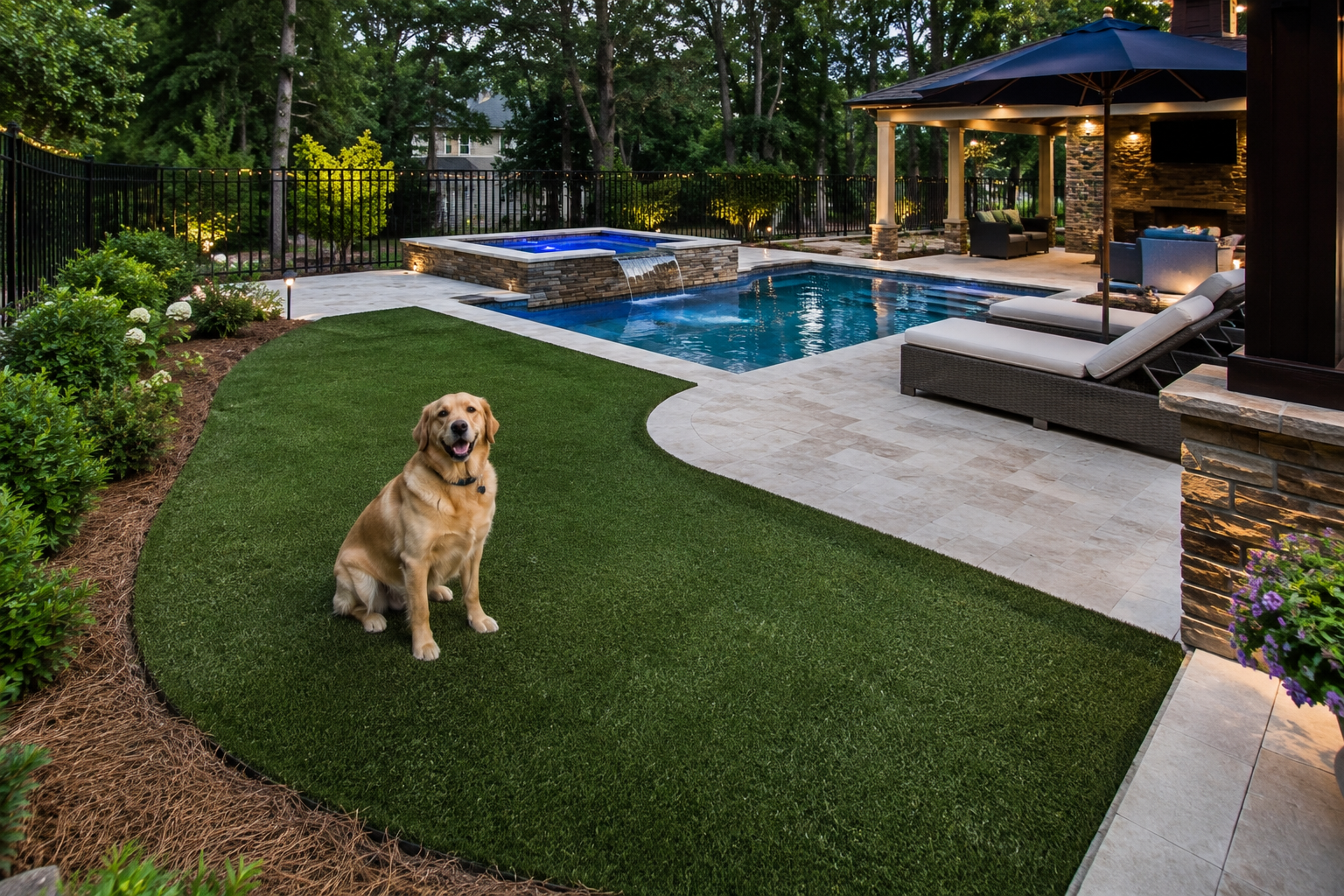
Artificial turf performs especially well in pet areas, poolside spaces, and high-traffic zones where natural grass struggles.
The biggest advantage is consistency. Turf does not need mowing, fertilizing, overseeding, or regular irrigation to stay green. It can solve muddy dog paths, bare patches under play equipment, and tight areas where a mower is awkward. For some North Atlanta homeowners, that lower routine maintenance is the reason turf belongs in the plan.
But turf is not maintenance-free. Leaves, pollen, dust, and pet waste still need attention. Fibers need occasional brushing. Pet turf needs proper drainage and odor-control infill. Seams, edging, base prep, and drainage matter enormously. A turf installation is only as good as what is beneath it.
Real grass: where it still wins
Real grass remains the best choice when you want a living, cooler surface and a softer traditional lawn. It feels better under bare feet in full sun, supports a more natural landscape, and can be refreshed over time with aeration, topdressing, overseeding, fertilization, and irrigation improvements.
In Georgia, the grass type matters. Zoysia is popular for its dense look, moderate shade tolerance, and refined appearance, though it establishes slowly and can build thatch. Bermuda handles heat and traffic well, but it wants sun and can invade beds. Fescue stays green longer through cool seasons and can work in some transition-zone conditions, but Georgia summers can stress it without thoughtful care.
Real grass is also more forgiving visually in large areas. If your property has generous open lawn, mature planting, and enough sun, a well-chosen grass can look elegant and grounded in a way turf may not. Keeping it that way is where a steady lawn maintenance plan earns its place.
Cost comparison for 2026 planning
Artificial turf costs more up front. HomeGuide's 2026 benchmark places artificial grass at $10 to $25 per square foot installed. The final cost depends on turf quality, base prep, drainage, edging, access, pet features, and installation complexity.
Real grass usually costs less to install. HomeGuide lists new sod at $1 to $2 per square foot installed, and resodding at $1.50 to $4 per square foot when old lawn removal is included. That does not mean real grass is always cheaper over the life of the yard. Irrigation, mowing, fertilizing, weed control, aeration, reseeding, disease management, and replacement all belong in the long-term maintenance picture.
Compare more than install cost
The right comparison is not just installation cost. It is installation plus upkeep, comfort, lifespan, appearance, and how much the surface improves your daily use of the yard.
Heat, drainage, and clay soil
Heat is one of the biggest turf questions in Georgia. Artificial turf can become hot in direct sun because it does not cool itself the way living grass does. For shaded courtyards and small pet areas, that may be manageable. For a full-sun play lawn in July, it deserves a serious conversation.
Drainage is just as important. Georgia clay holds water, and heavy storms can expose weak grading quickly. Whether you choose turf or grass, the base needs to move water away from the house and out of high-use areas. For turf, that means excavation, compacted aggregate base, proper slope, and sometimes added drainage.
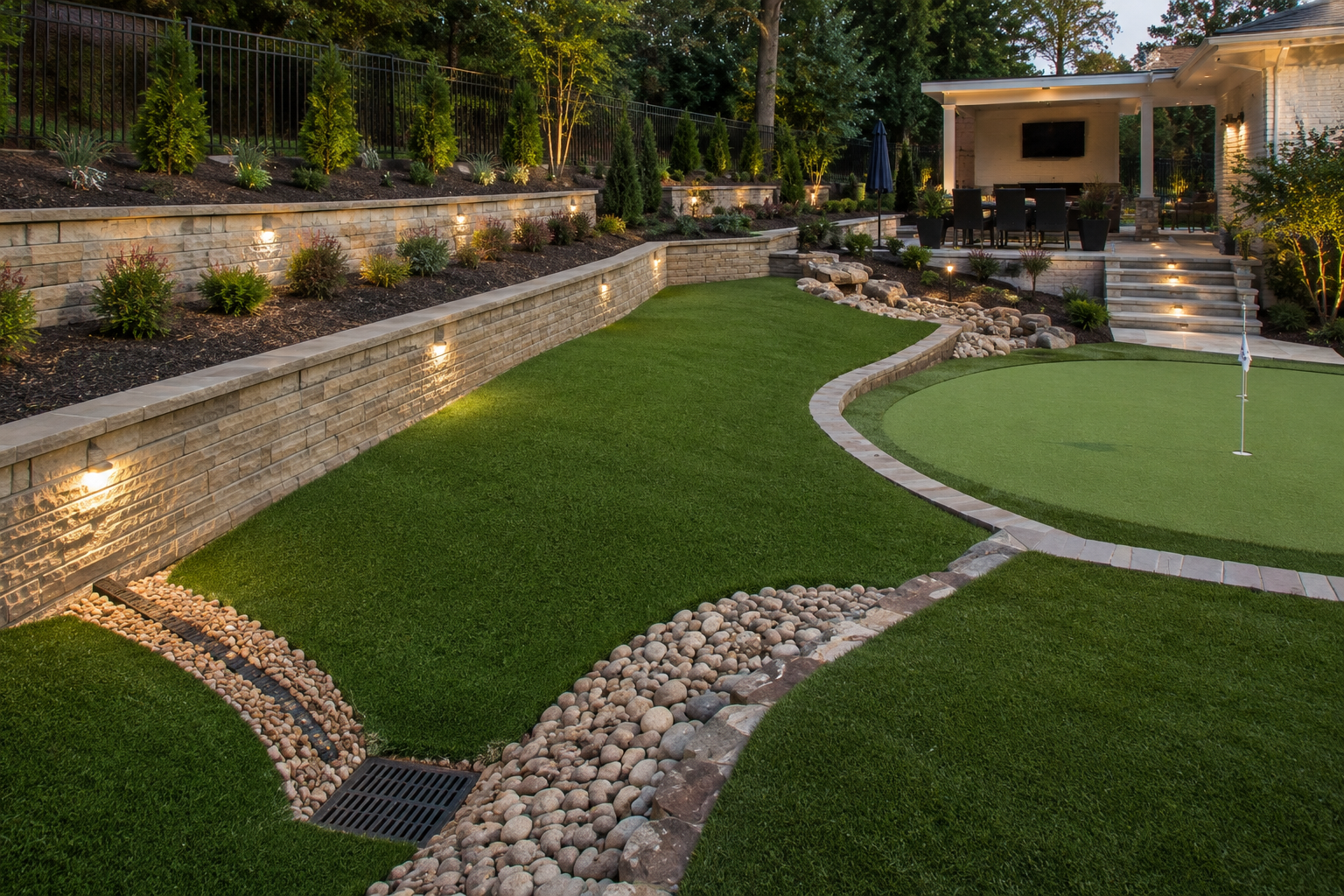
Proper grading and drainage are essential for both turf and natural lawns in Georgia's clay soils.
For grass, it may mean soil amendment, aeration, grading, French drains, or changing the planting design.
A surface choice cannot fix a bad drainage plan. We treat turf and grass as part of the landscape system, not as a cosmetic overlay.
Pets, kids, and everyday use
For dogs, artificial turf can solve muddy paws and worn paths, but the product must be selected for pets. Look for strong drainage, antimicrobial or odor-control options, and a maintenance routine that includes rinsing and debris removal. Poor pet turf prep can create odor problems in humid weather.
For kids, turf can create a consistent play surface, especially with a shock pad underlayment. Real grass is cooler and softer in full sun, but it may thin under heavy activity. Around pools, turf can reduce mud and clippings, while real grass can feel cooler and more natural. The best choice depends on the exact zone.
A hybrid yard often looks best
Many premium North Atlanta landscapes use turf as one designed element rather than as a full lawn replacement.
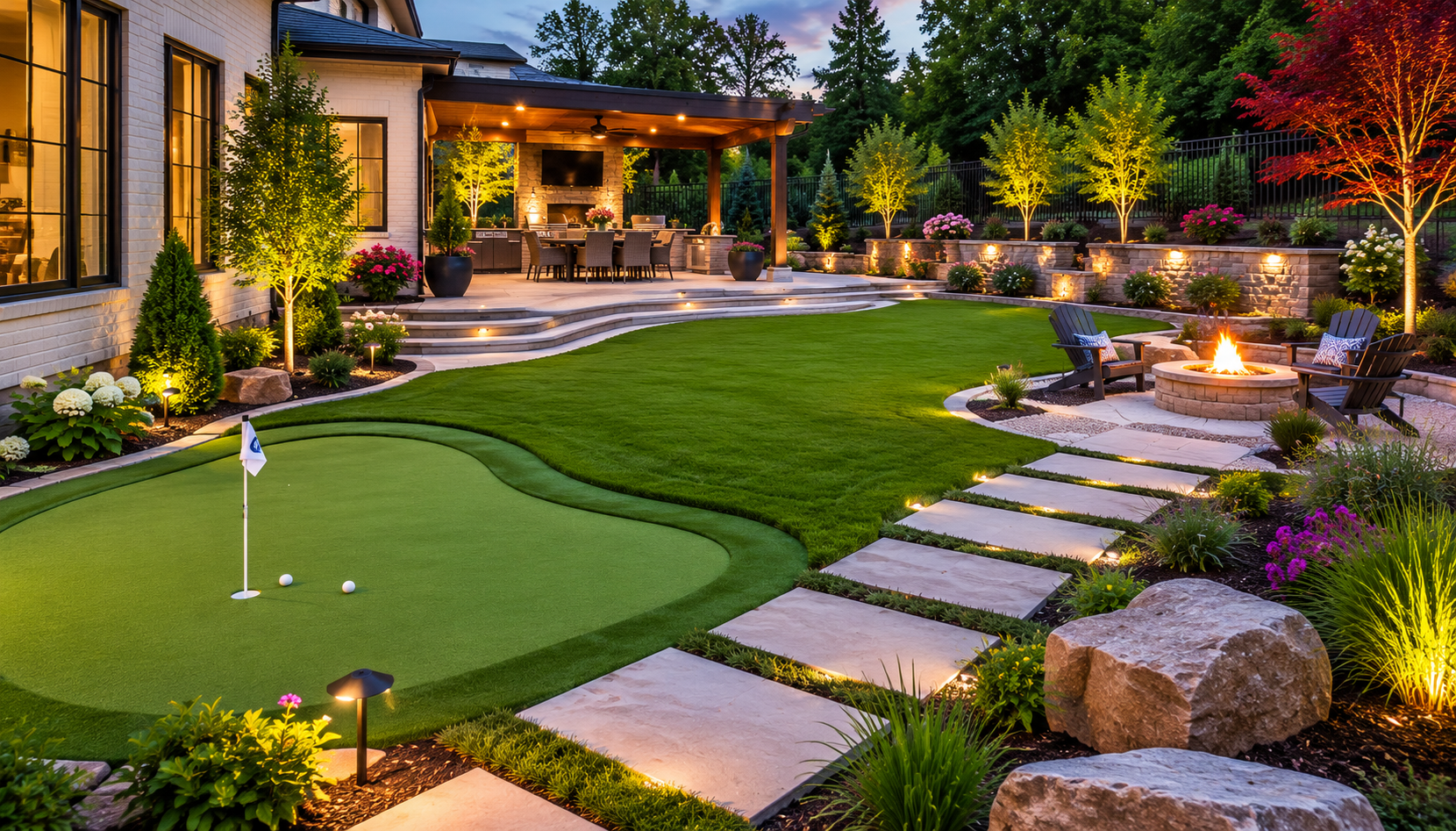
Many luxury landscapes combine turf, natural grass, planting beds, and hardscape elements for a balanced, low-maintenance design.
Turf can define a small play panel, custom backyard putting green, dog run, or modern green strip between stone pavers. Real grass can remain in the larger sunny lawn. Planting beds can handle shade and slope. Stone paths can solve circulation. Drainage can be built quietly into the composition.
That hybrid approach often looks more natural and more expensive than forcing one material everywhere. It also lets the budget go where the yard needs it most. That is also more useful than a one-product solution: it creates a complete surface strategy that includes drainage, planting, paths, maintenance, and visual balance.
Frequently asked questions
Is artificial turf good for Georgia heat?
It can work well in the right location, but full-sun turf can become hot. Turf is often best for shaded, small, high-use, pet, or play areas where real grass fails. For large sunny lawns, real grass may be more comfortable.
Is artificial turf cheaper than real grass?
Artificial turf usually costs more to install. National 2026 benchmarks list artificial grass at $10 to $25 per square foot installed, while sod is much lower up front. Long-term maintenance can narrow the gap depending on irrigation, mowing, and lawn care needs.
What real grass is best for North Atlanta?
Zoysia and Bermuda are common warm-season options, while fescue can work in some cooler or partially shaded situations with care. The right grass depends on sun, soil, irrigation, foot traffic, and the look you want.
Does artificial turf need drainage?
Yes. Good drainage is essential, especially in Georgia clay soil. The base preparation under turf determines whether water moves through properly or sits beneath the surface after storms.
Choose the surface that fits the life of the yard
Artificial turf and real grass can both be beautiful when they are used honestly. If you are rethinking a lawn, pet area, play zone, or low-maintenance backyard in Roswell or North Atlanta, Landscape Studio Group can help you compare the options and design a surface plan that fits the whole landscape.
Plan the whole yard, not just the surface
Use this article as a starting point, then compare finished outdoor living work and a surface plan that balances turf, lawn, planting, and drainage.